John Green Forum & the Universality of “Firsts”

First off: a confession. I have read several books since my last blogged book review a few weeks ago, and I plan to get back to reviewing at least some of them on here soon. Many of these are classic children’s books that I have re-read this year with my daughter, but that doesn’t mean I haven’t gotten anything new out of them. In fact, I think that the best children’s books have just as many new things to offer the mind and soul when you’re older as they do when you’re a child.

And on that point, the reason for this break in book reviews is for a different kind of literary post–one that I’m completely book-nerding out about!

John Green Forum at USM
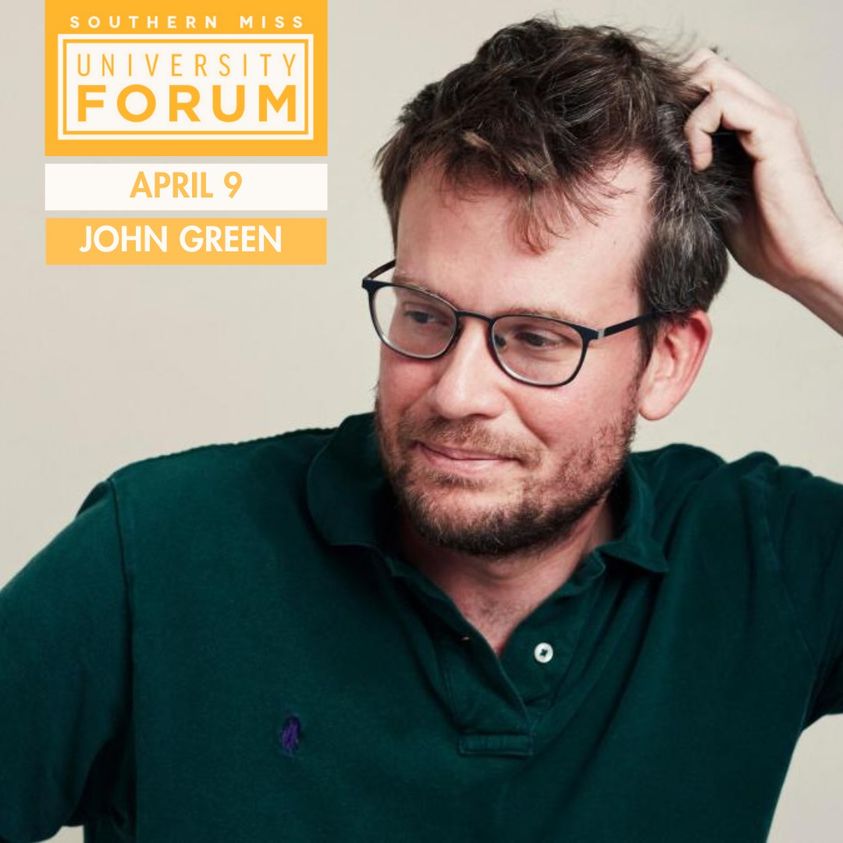
Last night, I got to go sit and listen to a forum hosted by the University of Southern Mississippi and featuring one of my very favorite authors (the author, in fact, of a recent book review published here)—John Green! John Green is best well known for his fiction which is aimed primarily at Young Adults, although his writing goes deeper and expects more of the reader than most Young Adult novels dare. His novels, while full of love and humor, touch on subjects that a lot of people feel uncomfortable discussing: grief and loss, illness, OCD, depression, anxiety and sometimes several of these at once–all under the umbrella of coming of age in this big ole’ confusing world. He’s also well known for his VlogBrothers videos (serving nerds like me since the early days of YouTube) and his more polished, but also entertaining, educational “Crash Course” videos, which engage young learners in subjects from chemistry to history.

During his speech, I got to hear Green describe his writing in his own words. He was a fantastic speaker: funny, witty, and real. He was smart, but also humble. In describing his process of writing, he kept things really simple. He said that writing should always be about “caring for the reader.” In terms of his YA novels, he said his goal is to “write books that care for readers in the unprecedented ‘firsts’ of these confusing years.”

It’s perhaps not an Earth-shattering statement, but it was one that resonated with me strongly as a lifelong reader. The best books, especially those for children/teens/young people, do care for the reader, and they do so in a way that is never lost or forgotten.

I felt the truth of that statement at 22, when I read John Green’s The Fault in Our Stars as a young adult in the process of watching my mom (who was also my best friend) be consumed by cancer. The book was also largely about cancer, loss, and grief–all things my family was experiencing for the first time. It was hard and painful to read, just as what I was going through was hard and painful. I remember that my boss at the time was horrified that I’d be reading something so sad at a time that was already full of sadness. But solidarity and understanding was what I needed then: a friend to bear the reality of that grief and pain and loss. Whenever I think of that book, I think of how it was there for me in that –a place that could handle my pain and discuss my confusion about the world not being the comfortable place I’d always assumed it to be. There are many other books that stick out to me as favorites from childhood and adolescence, too, most less serious than The Fault in Our Stars: Anne of Green Gables. Little Women, A Little Princess. Matilda, Harry Potter. The Once and Future King. As I think about it now- I realize that they all gave me something I desperately needed at the time. They were a piece of the puzzle making up who I would become.

Books that “Care for the Reader” During Our First “Firsts”

I bet if you think about this, you’ll find some similar examples. What are some of your favorite formative works of fiction? What did these books give you, that you really needed then? (Not that all children necessarily need, but what YOU needed?) It’s fascinating to consider this as a reader, and I think it’s necessary to consider if you’re an aspiring writer, too.

I also think once a book has cared for you in this way, at this sort of formative time in your life, it has earned a permanent place within you. There seems to be a transcendent gratitude that forms towards books and authors that shape you as a child and young adult. As Kathleen Kelly said, “When you read a book as a child, in shapes you in a way that no other reading in your whole life does. “

As I consider this, I also picture the packed house of John Green’s forum last night, and the variety of generations in the audience. I am solidly a millennial, the age of Green’s earliest YA readers and YouTube followers during the 2010s. There were also many people there who were younger than I am–college students and high school students with whom his work continues to resonate, 20 years later. I actually was surprised that my younger cousin, a high school student, asked if she could come with me. I didn’t know she was also a fan!

But there were older people in the audience, too–many of them! And this struck me because these are people who wouldn’t have become fans simply because they were young adults reading books made only to care for young adults. This seems to indicate something more than gratitude towards a book that has reached us right when we’re at that age of “firsts.”

The Universality of Firsts

So I thought about it, and here’s my theory. Those “firsts” are universal, and they stick with us longer than the “seconds” and “thirds.” The “firsts” are always and forever part of who we are. I think we carry those people who experienced them around with us always. To receive care through a book geared towards young people, whether it delivers the “medicine” at the time it is directly needed, or many years later when our perspectives have grown, is still very much like meeting a friend who understands and can speak to an intimate version of ourselves that will always remain.

Though we change, mature, and grow, we carry those vulnerable selves with us. I think that, in time, and when growing in the right ways, we hopefully become people who would protect and care for our former selves most fiercely. And, more importantly, who will care for those younger than us who are experiencing those firsts for themselves. But we can still find gratitude in those books that understand where we’ve been and which could have helped us then…that, in new ways, can still help us now.

And now I’m wondering if that’s why I now cry as an adult when starving Sara Crewe gives her bread to the hungrier child in A Little Princess, or when Mrs. Weasley always sends Harry a Christmas sweater too (and he wears it even when Ron throws his own sweater aside). There is something in me that will always be fiercely protective of those resonating archetypes, many of which I now see in own children. And I feel gratitude still for these characters and perspectives, though my own role in the story has shifted.

These are all just thoughts pinging around my brain on a stormy afternoon while my children (unprecedentedly) nap at the same time???!? But honestly: reading a lot of children’s literature lately, and hearing from one of my own favorite YA authors in real life, has definitely gotten me thinking about the power of Children and YA lit. I truly believe it is something special, with a power that can stay with us always.

If you’ve stuck with me this long, thanks! I’d love to know your thoughts on all of this. Leave me a comment to join in the discussion. And keep scrolling to see some pictures and a few epic things John Green said which I managed to jot down.

  • Have you read any John Green? If so, what’s your favorite book of his?
  • What is a book “cared for you” as a child, teen, or young adult? How did it impact you?
  • Do you think we carry around some version of our younger selves and/or the impact of those 1sts? How would you describe your own experience of this?

Now for Pictures, Storytime, and Some Epic John Green quotes!

After getting lost on the not-that-big campus (such is my gift) I finally gave up on any vacant visitor’s parking and grabbed a random parking spot, praying that it would not inconvenience anyone and/or earn me a ticket. We arrived right as the main auditorium was declared full and ended up in this scary-big overflow line (there were even more people behind us). I was crying inside thinking it wasn’t going to work out, but we were able to grab some of the last remaining seats thanks to some determined ushers. Then I almost cried out of gratitude.

It was a real emotional rollercoaster before any genius words were spoken, I tell you. I wore my bright red rash, as always, when under any amount of duress.

The hall could not have been more packed! I ended up sitting between two friendly strangers in the highest section of the balcony, but the view of the stage was still pretty clear. Right before putting my phone away per forum protocol, I grabbed a one-and-only photo of the man himself. (I think it’s non-professionalism vouches for it’s authenticity.) I also packed a tiny notebook, which I intended to use to jot some notes. However, I was so wrapped up in listening that I didn’t get many notes (no regrets), but I do want to share the few quotes I wrote down, following this stunningly professional picture.
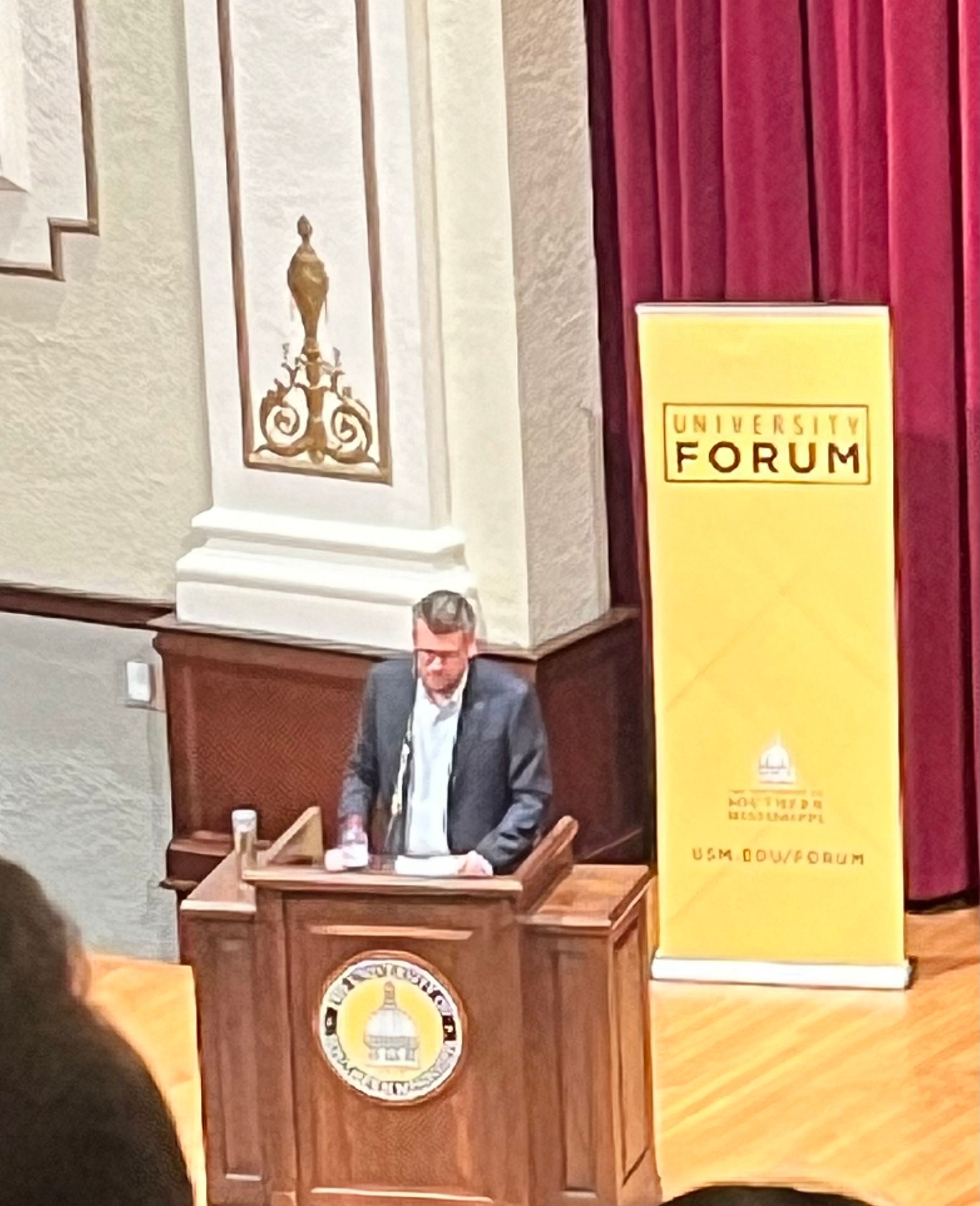
In addition to discussing his writing, John Green had some truly impactful things to say about despair vs. hope. He talked about how his own experiences serving as a chaplain in a children’s hospital impacted him deeply and caused him to despair, and how the process of writing was therapeutic. He described that -even though he’s rarely written about those experiences directly- all of his books are really about that singular experience in some way or other.

“I wrote myself out of despair.”

He also encouraged anyone going through something difficult right now, or struggling to remember this key piece of advice:

“Things as they are, are not things as they will be. Keep going.”

He talked about hope as both the product of human determination and the enemy of despair, saying.

“As a worldview, despair has a weakness. It doesn’t tell the truth.”

(And)

“Sometimes it is easier to notice the bad than to notice the good. Good news happens slowly, as the result of human effort. Bad news happens all at once.”

He gave some really encouraging examples of recent good that has been accomplished based on years of human effort, but that we might not always notice in the face of immediate dark news. He also pointed out how this hope should inspire us to combat the despair, to keep going and creating good.

The whole experience of the forum is very much on my mind today! I feel inspired as a reader, writer, human– all the things. Thanks John Green for giving this lecture/Q & A and thanks to USM for inviting him!

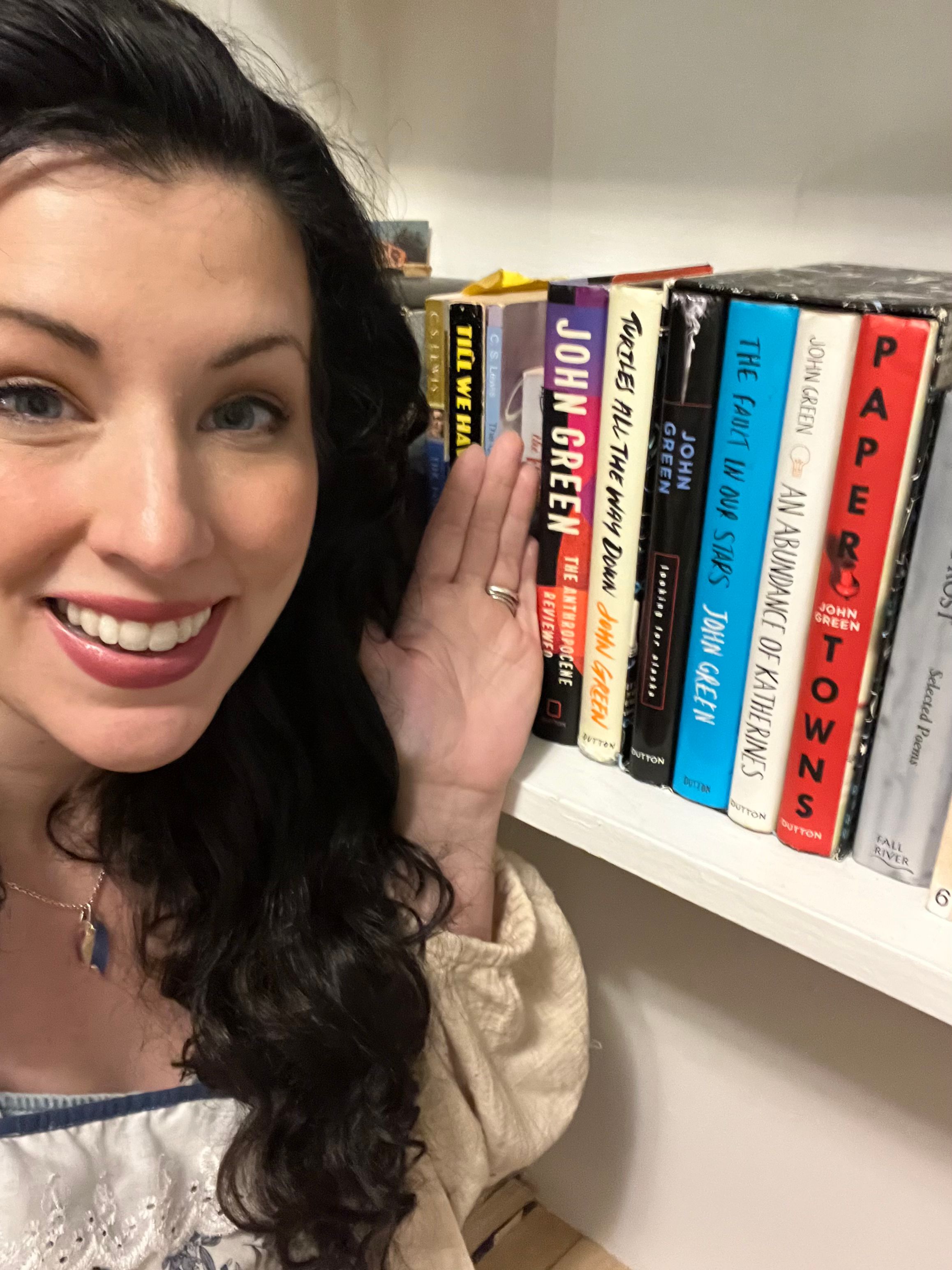
Lastly, some #nerdfighter inspired photos because #DFTBA. If you know, you know. If you don’t know, here’s a YouTube channel.

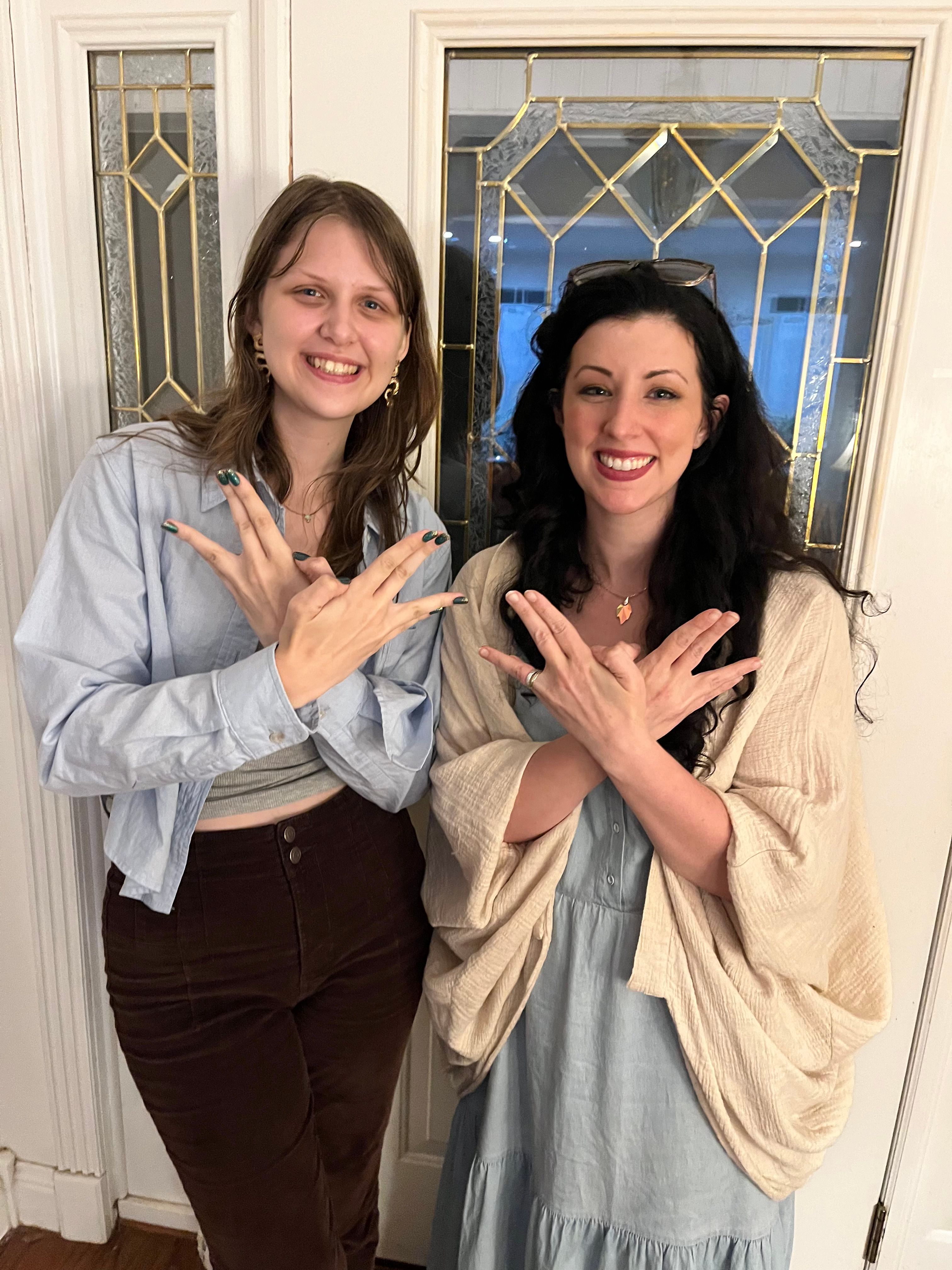
(Last one is me getting pumped to re-read everything he’s written.)

Book Review: The Anthropocene Reviewed by John Green

My rating: 5/5 quills

I credit The Anthropocene Reviewed as the work that changed my feelings towards non-fiction, and that’s why it’s one of my top recent reads.

I have always been a fiction lover, as you can probably tell if you follow my blog. I’m particularly inclined towards literary and historical fiction and fantasy. And, I’ll be honest, as a fan of John Green’s works of fiction, I was not thrilled to discover that his latest release, The Anthropocene Reviewed, was an essay collection. Frankly, the word “ESSAYS” does not sound like it will sweep you away.

But because I love John Green’s voice as a writer, I was intrigued enough to give it a try. I’m so glad I did! I was unwillingly hooked from the very first essay, as Green digs into humanity’s role on the planet through a series of (at first) seemingly random reflections on various topics (from his fear of Geese to his love of Dr. Pepper).

The further you go into the essay collection, the more the patterns within his many essays become clear, forming one conversation that goes deep. It grasps at questions about humanity (leading to the name) and invites you to think, not just read, about things like: What makes something “real”? What is our role as humans? Why are we so powerful? Why don’t we do more with that power? 

These are not small or random questions, but they are so enjoyably and tactfully elicited in the reader through this essay collection.

Green’s conversational writing style, use of anecdotes and humor, and unabashed self-exploration made me feel as if I was fully walking in the shoes of another, learning new perspectives, and asking myself things that I’ve never considered before. That’s what great writing does!

While I have experienced this “empathy phenomenon” many times in fiction, The Anthropocene Reviewed showed me how they can be uniquely experienced in non-fiction.

I loved this book because of it’s conversational and witty tone, it’s many fun factoids, and it’s brilliantly deep layers. But I think I loved it most of all because it has opened up a whole new pathway in literature for me. If anyone could do this, I’m not shocked that it was John Green!

Book Review: Eve in Exile by Rebekah Merkle

My rating: 3.5/5 quills

As you can tell from my quill rating, this was a “like,” but definitely not a “love.” While I know that this book is much-loved in many of my Christian circles, there are several things about it (“evidence,” examples, and tone) that weren’t appealing to me at all. That said, I do think it’s a unique and important book, as it handles many important topics with depth, complexity, and Biblical truth. Those are all wins. Now let’s dig in a little deeper. (But first I wanted to give you the chance to prepare yourself to forgive me if you love this book, and probably also to forgive me if you hate this book.)

Eve in Exile by Rebekah Merkle is a conversation starter, either way you look at it. It’s a thought-provoking, unique, counter-cultural stick of dynamite. Tackling “The Restoration of Femininity” from a Biblical lens, Merkle digs into how the diminishing of Biblical femininity has rippled through our culture, touching on everything from gender roles, having babies, not having babies, and what “homemaking,” really means.

The book stands out for its unique angle on a topic which may seem niche, but which is actually broader than it might first appear, rippling into many aspects of all of our lives.

But let me tell you, my reaction to this book was a rollercoaster.

This is noteworthy especially because, on paper, I’m the poster child for its intended audience (having much in common with the author, herself): an educated, Christian, traditionally feminine, homeschooling mom who thinks “home” is pretty special and worth sacrificing for/ investing in. Yet, even as the target audience, I had issues with Eve in Exile.

Let’s start by some of her main points, many of which I found to be logically organized and well-presented. Here are the highlights of the conversation in Eve in Exile:

1. Gender Roles and Definitions.
Merkle presents a strong argument for distinct gender roles, suggesting equality shouldn’t mean “sameness.” I enjoyed her discussion of boundaries, differences, and excellence as she explored how “the lines define and create a space where excellence can thrive.”

2. Feminist Movements’ Impact.
She focuses not just on the what of women’s basic rights as humans (which she does agree with), but the how and why (which she does not agree with). She goes on to describe how the “how and why” of the Feminist movements have invoked many problems in our current culture, including:
-Celebrating selfishness over selflessness
-Separating sexuality from motherhood, devaluing both as a result.
-Creating a culture that no longer values what femininity actually is, because it’s so focused on making women just like men.
-Making a mockery of the traditional “homemaker” role which is often seen as either sloppy and depressing (think: the millennial mom Instagram trope based on her description) or as a 1950s stereotype (think: a superficial and purposeless existence based on her description).
-How this all leads to a gaping, black hole of overall purposelessness.

3. God’s Design for Women.
This is where Merkle shines, emphasizing women’s unique, God-given roles. She discusses how equality is harmonious when women and men have distinctive roles. She does a really excellent job showing the importance of both, how our current culture may not value one as much of the other (much needed validation, moms), but how we can re-claim ownership of Biblical femininity and find great satisfaction and joy in doing so (I was thinking: “OK. YES. LET’S GO!)

4. Understanding Biblical Submission.
To me, this section was the most dynamic, potentially bombshell, and most well-handled part of the book. Merkle tackles two controversial passages of Scripture which are often mishandled (either denied or misinterpreted): 1 Corinthians 11 (“Woman was created for man”), and Titus 2:3-5, which describes the role of Biblical women in society. My hackles raised slightly here when I realized what she was getting into, but I read it, nonetheless. I have to say that her discussion of these Scriptures is uniquely well done, and worth a read if you are a Christian woman. It’s counter-cultural, but Biblically grounded and convincing. The Biblical perspective here is what makes it so good AND EVEN NON-OFFENSIVE (if you are a Christ-follower.) Ultimately, this section glories Biblical womanhood by comparing it to the life of Christ.

While I think these major points were well-done and worth reading if you are a Christian woman, my praise comes with some serious reservations (and a few eyerolls). Here are some reasons I struggled with Eve in Exile:

1. So Much Stereotyping, Generalizations, and Negativity.
One major issue with the book is its tendency toward stereotyping, generalizing, and a negative tone against entire groups of women. This is particularly evident in the discussion of the 1950s housewife. Merkle portrays these women as vapid and unfulfilled, their meaningful work supposedly replaced by gadgets, diminishing their role as home keepers. While I understood her initial point, her continued portrayal devolves into a demeaning stereotype of an entire generation of women.


For example, Merkle uses “the casserole” as a recurring symbol of lazy homemaking, frequently associating it with the 1950s housewife, whom she describes as preoccupied with just “throwing a casserole in the oven and looking nice.” This oversimplification does a disservice to the complexity of women’s lives. Many women found, and still find, fulfillment in caring for their families and homes. (If they can now, as she argues, then why couldn’t some then?) Additionally, it overlooks the fact that some women had jobs, often facing unfair treatment.


Her suggestion that greater respect and happiness would have come during this time for women if only they had found greater joy in, and worked harder at, their homemaking roles in the ’50s, instead of entering the workforce. (SERIOUSLY??? Let’s go talk to June Cleaver about this one.)

2. Use of Questionable Statistics
Merkle also uses questionable statistics to support her arguments. For example, she compares the rates of antidepressant use among women in the 1950s to the present, insinuating that women are less happy now due to their participation in the workforce. (It was a rise of about 3%). This comparison is super flawed, given the significant changes in mental health awareness and treatment since the 1950s. 3% is barely a fluctuation, especially given that everyone and their dog has a therapist today, whereas it was a lot less common in the 1950s. The fact that she even uses this example as “evidence” undermines her point.

3. Lack of Depth in Examples
Lastly, and perhaps most disappointingly, Merkle fails to get personal and go deep when it really counts. More personal accounts would have added so much to the whole book, but particularly when Merkle delves into the essence of Biblical femininity. She starts this section strong, offering a compelling view of women as translators of the immaterial into physical, beautiful experiences. She uses the strong example of how women create the experience of Christmas to highlight the meaning of Christmas.
However, her examples beyond that fall short, focusing on cooking, interior design, and dressing well as pinnacles of Biblical womanhood. (Really?) This approach paradoxically reinforces the very stereotype of the 1950s housewife—focused on surface-level tasks—that she earlier criticizes. A deeper exploration, perhaps including personal anecdotes from her own life and journey, would have added significant much-needed impact to this section.

In essence, I do think Eve in Exile is a worthwhile read for the Christian woman, but I can only recommend it with some caveats. It’s insightful, unique, thought-provoking, and grounded in a strong Biblical foundation. Yet, it sometimes slips into stereotypes and misses the mark in fully exploring the depth of its subject. In other words, its tone often undermines the message itself. It’s a book that will resonate with some, challenge others, and leave many, like me, feeling a blend of strong agreement, frustration, and the occasional eye-roll.

The Duke and I by Julia Quinn

My rating: 2.5/5 Quills

Dear Reader,
I have a confession to make—one that evokes a deep blush. Yet, in keeping with my commitments to our reading blog society, I feel compelled to share it with you. In my quest of finishing a book per week, my second novel of 2024 is quite different from my usual literary fare. It is, in fact, The Duke and I, the first novel in Julia Quinn’s Regency romance series, Bridgerton.

Perhaps you have watched the Netflix adaptation?

The series follows the high-society Bridgerton siblings as they navigate the social sphere of Regency era London. All happenings (both secret and not secret) are reported in an infamous society gossip column, written by the mysterious “Lady Whistledown.”

The Duke and I is a love story between the innocent, kind-hearted, and perceptive Daphne Bridgerton, and the worldly, handsome, tortured Duke of Hastings, also known as Simon. Simon has a tragic past. Daphne has a happy one. It’s one of those Beauty and the Beast situations from the outset.

First, reader, I must tell you. This is a Regency romance, in every sense of the word, and this is not usually my cup of tea. I love a good love story, but I generally feel uncomfortable being thrust into that part of other people’s lives (even fictional ones). I feel like I’ve walked into someone’s bedroom accidentally, and I’m just not a fan of that. As I said: blushing.

However, if the story and/or characters are good, and the love story is compelling, I feel more open to a thoughtful use of love scenes. And ultimately, I felt that they were mostly thoughtfully used in this book: to emphasize key parts of the love story instead of being the whole love story. The Regency era setting also feels authentic, the tone is witty and enjoyable, and the characters are likable.

Without too many spoilers, here is the gist of the novel. Young Daphne Bridgerton and the Duke of Hastings, despite being quite opposite, strike up a friendship and decide it will be to their mutual benefit to feign a courtship. The Duke hopes that this faux-courtship will deter socialite mothers from thrusting their daughters upon him. Daphne hopes that appearing to have caught the season’s most eligible bachelor will make her look more desirable. Their plan works, but, of course, things become more complicated. The four main drivers of these complications are:

  1. The Duke, who hates his late father, has sworn to never marry and never, ever have children (denying the estate the heir that his father would have wanted).
  2. Daphne’s only dream is to have a family, and children, of her own.
  3. The two fall in love.
  4. They are forced to marry when they are caught in a compromising situation.

    That’s it. That’s basically the plot. There’s not a lot happening, but what does happen is well done. Ultimately, I cared about Simon and his background. I wanted him to overcome his hate. I was rooting for Daphne. She was innocent and naive, but also intuitive and wise—a realistic and interesting heroine. The chemistry between them was sweet and fun to read.
    Would I recommend it to everyone? NO! This book is a little bit like Jane Austen Cliff Notes with some sugar and chipotle powder sprinkled on top. However, the thoughtful historical details and character development lend it enough substance to rise above the typical ‘romance novel.’
    It’s well-written, but lacking much depth. That said, I mostly enjoyed it. I enjoyed it enough to finish it, anyway. It’s not amazing literature. However, if I considered it to be bad literature, I wouldn’t have finished it and would not be writing this at all.

    Ultimately, reader, The Duke and I was a bit like a tea time macaron: sweet, light, non-hearty fare that’s not for everyone, but may make a nice treat for some.

    View all my reviews

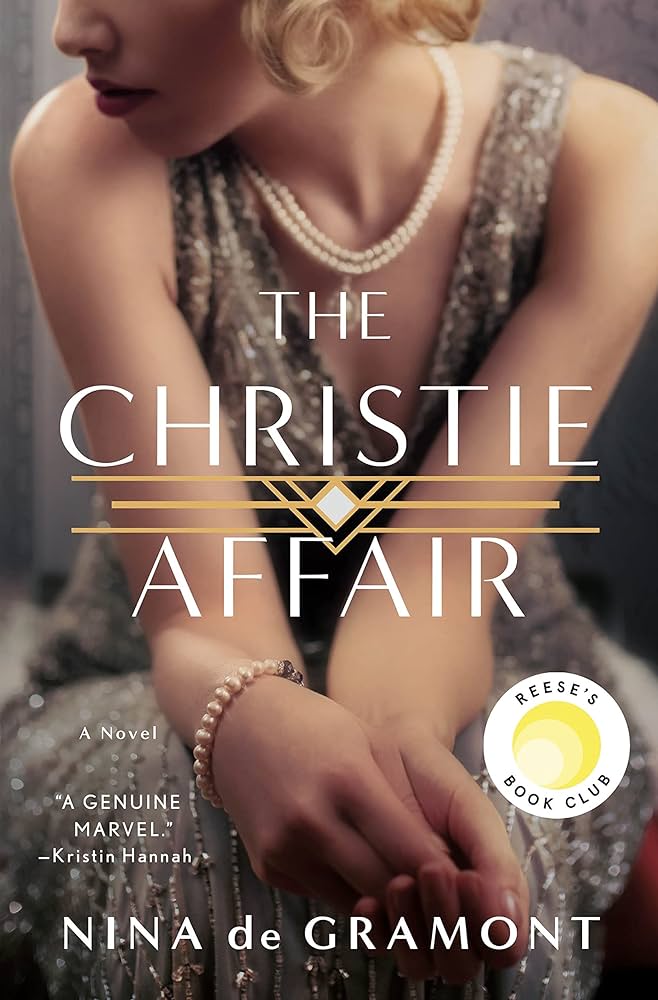
Book Review: The Christie Affair by Nina de Gramont

A flapper-esque woman in pearls on the cover. A 1920s disappearance. A work of historical fiction based on the life of mystery icon, Agatha Christie. I’ll be honest: the cover, and the jacket-flap summary, won me over. However, ‘The Christie Affair’ by Nina de Gramont turned out to be something different than I initially expected.

This novel is a character-driven, slow-burning tale. While the story’s hook is to explore the whereabouts of Christie during her famous two-week disappearance with no explanation, the bulk of the story revolves around a supposed reason for her disappearance: her husband’s mistress, Nan.

As the story unfolds, it sets a stage with distinctive characters clearly in the spotlight. The two primary women, Nan and Agatha, seem to have few things in common on the surface, but they are connected in surprising ways. Agatha’s husband, Archie, is a truly love-to-hate-him character, reminiscent of Tom Buchanan from ‘The Great Gatsby’. The inspector on the case of Agatha’s disappearance, Chiltern, gives strong nods to Christie’s famous detective, Hercule Poirot. Lastly, Finbarr, a tragic, war-torn, childhood love of Nan’s, adds complexity and uncertainty to the whole.

The setting and style of the story are very believably 1920s, reminiscent of works written during that time. Even more impressive is how the style of ‘The Christie Affair’ mimics the work of Agatha Christie herself. This lineup of memorable characters, while initially only mildly interconnected, becomes closely tangled as one mystery unfolds into many more—ultimately leading to the revelation of unexpected connections, motives, crimes, and resolutions. Interestingly, and perhaps appropriately, Christie’s character is more background to the main actions of the story. Her disappearance focuses more on internal resolutions, showcased by her furious writing throughout. The reader will be much more caught up in the mysteries surrounding the true main character, Nan.

Ultimately, this book is more than it seems; it’s not just a cozy mystery, or a fabulous homage to Agatha Christie, but also a portrait of how we all, to some degree, write the mysteries we present to, or hide from, the world.

I give The Christie Affair 4/5 quills!

Have you read The Christie Affair? What did you think? (Personally, it made me want to add some Agatha Christie books to my Good Reads list!)

P.S. Yes, it’s me! I’m still here! I’ve been freelancing blogging so much for other people over the past couple of years, but I’m back to my personal blog to keep in touch with writing (and reading) that I do for my own self. I am not calling it a “2024 resolution”…despite the fact that this review comes on 1/1/2024 along with the desire to read and review one book a week this year. I’m not calling it that. Regardless, I hope it will turn out that way. Anyway, I anticipate this blog being more book-centric this year. Thanks for being here!

The Southern Lady Code by Helen Ellis


This is not the kind of thing I usually read. I’m not typically a reader of essays, and – though I am Southern – I’m not intrinsically drawn towards Southern stories. That is why I am so grateful for bookstores, where I stumbled across this collection by Helen Ellis. The title (and the cover) got me to pick it up, but the first page made me snort as my thumb and index finger came immediately together to turn the page. This is the kind of bookstore moment we crave, right? I knew I’d leave with something that 1. Was not “in my wheelhouse” (which as Ellis translates is Southern Lady Code for “comfortable.”) and 2. Was addictive.

In the tub over the next few evenings, I quickly binged this collection like you binge your new favorite Netflix series. A few sittings. A few “episodes.” You look forward to it. It’s over too soon.

Ellis’ series of thoughts, anecdotes and insights made me feel like I was hanging out with a witty and self-aware friend that shared distinctly Southern family background quirks. I wondered, “Does she actually have my Mammaw’s church cookbook at home?” and “I thought it was just my mom that taught me the power of ‘no thank you.'”

I was surprised that, in the essay on good manners in extreme situations, she left out that Southern Lady’s must leave the house tidy when leaving it …in case of death (because, you know, you wouldn’t want people to remember you as a slob). These are the sort of family secrets she seemed to know and share in this collection.

This insanely readable book of essays will definitely appeal to you if you are a “Southern lady,” or even if you aren’t. Read it if you are craving a cozy girl’s night in. Read it if you need a laugh. Maybe this essay collection is not for not for everyone, but you can see yourself being friends with the fictional likes of The Marvelous Mrs. Maisel or Lorelai Gilmore, you can be definitely literary friends with the non-fictional Helen Ellis.

I think I’ll go buy her other essay collections.

Rebel in Bloom

by Kathryn Gustafson

There are things that might seem plain
About the box you think I’m in
Because of how I speak quietly
With a softness that could sound like timidity
And the way my questions form, sometimes,
Falling childlike at
the end of lines.

I don’t weigh the measure of my time

Against the world’s rigidities,

But it’s not because I have no fire.
In fact, I have my mother’s complicated ire,
Balanced by
My father’s chess games, admonitions,
And the words of a thousand books
That make a world within my head.

I’ve lived through my childhood horrors,
Met death inside the eyes of others’,
Held hands of people that I love, as they left this life forever.

I fight each day against a mind
That’s knotted as a tangled line
With a heart which has been shattered,
A resilience that is tested, battered.

It’s exhausting to admit:
How much loving people hurts.


(How many times do I remind myself what love is worth?)

So I watch and weigh the fire and the words.
To find the phrases that would win
the wars,
And lose the love.

Power to win.
Or chance to bloom?
A choice that no one would assume,
Is difficult.

But the gentle rebel in me knows–
Where things burn,
Nothing can grow.

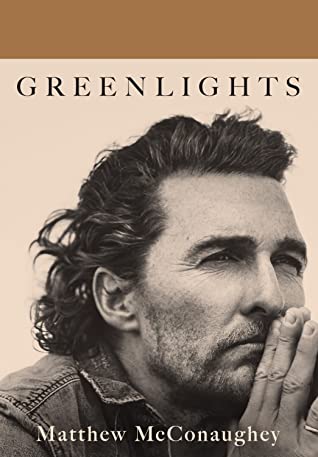
Thoughts on Greenlights by Matthew McConaughey

I’m new to this whole celebrity bio genre, so I don’t really know how to define my expectations for this book: life of a celebrity who has done crazy things, cowboy gone Hollywood lifestyle? What do I know about Matthew, really? Abs? Rom coms? Interstellar (that was a good movie…) It’s not something I’d normally pick up, but I was surprised to hear it so highly recommended by several people whose opinions I respect. Then we decided to read it in my book club, so I dove in.

I decided to listen to the audiobook, and as soon as Matthew started diving into his rollicking childhood in this unexpected-Texan-poet-of-all-honesty way, I was hooked.

What is this book? I don’t know. Like the main “character,” it doesn’t really fit into any boxes you’d expect. It’s a collection of stories from a very interesting life. It’s a lesson, shown via stories, about being objective, and getting relative, keeping yourself going when life is hard–and (most interestingly) keeping yourself grounded when it’s a little too smooth. It’s about the need to pursue, balanced with the need to restore.

In tone, it’s honest, not preachy. It’s poetic, a little mystical, and laugh-out-loud funny.

I came away with a few takeaways, and as I talked with other people about the book, I thought it was interesting to see how different pieces of insights and observations stuck to and hit us differently. There are simply so many of what Matthew calls “bumper stickers,” in this book–tidbits of things he’s learned and wants to remember.

And here’s the thing. I may not 100% agree with every single one of Matthew’s bumper stickers. There are some people out there who don’t and won’t like this one because of that. However, I’d argue that the point is that I don’t have to agree with every thought to appreciate the whole. This is the author’s story, and he’s not telling anyone else how to live theirs. In fact, I think that’s one reason that this book works so well, and why it’s so clever in a year where everyone is eager to tear each other apart over different opinions. He’s simply a living character, telling his story.

The interest and the connection isn’t grown from a perfect leading man, but from from a complex and likeable one, with an interesting journey to share.

In the journey of this book, we experience and reflect on how life can have its greenlights, yellow lights, and red lights. We see and understand– along with a reflective Matthew– how each of these presents different opportunities. It might also leave you (as it did me) with a desire to document things more, so that one day you can look back on it and see what you couldn’t in the (then) present moment.

Just as in works of fictional literature that I love, I find – in Greenlights – a compelling non-fictional character, pieces to connect with, and eye-opening perspectives. I’d recommend this book to anyone who enjoys a good time and a little down-to-earth whiskey wisdom.

3 Things You Can Do When Holidays Are Hard

It’s Christmas week, and I realized the other day that this is the first Christmas since my mom passed away that things have felt — different. While there are still many times when the absence of her screams in my chest – her soft hugs, radiant smile, and all the little things she did she made the season so special- this year I find myself enjoying the season in a way that hasn’t felt this authentic in a long time.

Over the last few years, I’ve made an effort to carry on some of my mother’s traditions as a mom, myself, with a bittersweet undercurrent. I’ve also made many new traditions with my husband and daughter, so that now there’s a kind of changed vision/expectation of what Christmas is. There’s a “new normal” in a way (although maybe 2020 has ruined us on this phrase). I always enjoy and go through the motions of Christmas, but this year is the first year when my grief hasn’t swooped in for brutal surprise attacks.

That said, the absence of my mom is still very much a part of the Christmas season. It’s just that, at this point in my life, new things have bloomed over the roots of memories that will always be there. I don’t think our growth comes at a point when “it doesn’t hurt” anymore. As one of my favorite authors, John Green, once wrote: “It’s going to hurt because it matters.” I think our growth comes as we accept what is there and keep living, keep moving forward, keep learning new things and loving people (even though, when you’re hurting or grieving, loving others is probably one of the hardest things you can do. I think it’s also the most important thing we can do.)

While I find myself in a more festive state of mind this year, I wanted to share some things have helped me over the years when the holidays have been particularly hard (and which I still do try to remember). If you are struggling this year, as many people do, I also want to say that I know my grief is not your grief. Perhaps you’re struggling with the loss of a person, a job, a lifestyle, a traditional Christmas vacation.

Maybe you’re not grieving anything specific at all, but the holidays trigger anxiety, or in an inexplicable ache that no one else “gets.” The visions and expectations of a perfect Christmas can stir up emotional storms in a more people than we probably realize, and I think that’s probably more common this year than in recent years past. Maybe our experiences and hurts are totally different, but even so: you’re not alone. Here are 3 things that have helped me, and I hope that they help you too.

1. Don’t Try to Make it Something It’s Not

Pretending to be in non-stop jolly-mode during the holidays when you’re struggling inside can be a dangerous game, especially if you aren’t being real with your closest family and friends. And especially if you aren’t being real with yourself. I’m not saying that you should dwell obsessively on your hurt (which can be dangerous too), but more that you should admit it’s there to yourself, and start to recognize the things that trigger it.

The second important part of this? Don’t pretend to the people who care about you the most. Let them in on what’s going on. This comes more naturally for some people, and less naturally for others. If it’s hard for you, it doesn’t have to be a big “sit down and talk.” You can let others in through smaller avenues.

One of the small things that has helped me cope with my mom’s absence (and grandparents’ absence, too) over the last few years has been simply to talk very openly about memories with them from previous holidays. Like, I’d tell my husband about how my mom and I always went to see The Nutcracker, or talk about the time that my Papaw snuck into the kitchen and ate almost the entire coconut cake by himself.

During the first couple of years, especially, talking about these good memories hurt more than they made me happy. They showed my pain, and my husband didn’t quite know what to do with me telling him things that seemed to make me cry. Talking about feelings – especially painful ones – is perhaps not his default, but he loves me. He’s learned that it’s something that helps me, and that sharing the memories which trigger an ache inside me helps me to feel less alone.

Because he loves me, he listens, and that makes me feel like I don’t carry those heavy things all by myself. If you are hurting, I hope you’ll think about at least one or two people that you know would want to help. And no, they probably can’t fix your pain, but not being alone will make it easier to carry.

2. Figure Out What You Need and Ask The People Who Care

Honestly, this one goes hand in hand with the last point. If you’ve found a person in your life that you are comfortable trusting with your holiday struggles, then it’s going to help you both if you can figure out what kind of support you need.

Some people are naturally gifted at just knowing what words you need to hear (or if it’s not a good time for words). However, since we all have different ways of processing and coping with grief, depression and anxiety, it’s more likely that your friends or family members will want to help, but be a little flummoxed as to the how.

And sometimes when people want to help but don’t know how, it can add hurt where, by all good intentions, help ought to be. Your friends and family love you. They don’t want to hurt you with the wrong words or actions. And, as funny as it may seem, you are sometimes the only one who can help them help you.

This involves digging yourself out of your hole a little bit so that you can give a few specific suggestions. I think that the process of gaining that insight into what will actually help is a little bit helpful, on its own. Consider about things like:

Do I need someone to just listen, or do I want to have a conversation about this? Would _______ pray with me? Do I just need someone to understand what I’m going through and then hang out with me and do something normal?

If you’re reading this because you’re struggling, I get that it’s hard for you to know what you need right now. But anything you can give your friends/family in this area will help them to be there for you in the way that I’m sure they want to be.

3. Assess What is Actually Self-Care

Because it’s been such a trying year, there are a lot of jokes about what self-care means these days. “Mommy needs wine,” has been a popular one (and I’d be completely lying if I claimed to never have said it.) However, let’s take a reality check moment to remember what self-care actually means. It’s taking care of your needs: emotional and physical. Not your immediate wants (AKA locking yourself in a closet with a bottle of wine and junk food is not actually self-care, even if it seems like what you want to do).

In fact, self-care often means doing the things we don’t want to do when we’re down: talking to a friend, going outside on a walk, doing something creative, drinking more water, cooking a nutritious meal. Take care of yourself like you’d look after someone you love, and you’re getting closer to what I think “self-care” is intended to mean.

Especially, if you are finding yourself drawn more and more regularly towards self-isolation (not the quarantine kind, the emotional kind) and unhealthy habits, it might be time to step back and assess what taking care of yourself should actually look like. You can start small. Drink more water. Listen to music that you love. Go outside. Call a friend. Take care of you.

I know that these are general tips, but I hope that they help you if your holiday season has been a difficult one. I also just want to say that it’s okay- more than okay- to be complicated. Christmas (the Christmas that I believe in) is about the salvation of humanity. And humanity is complex, damaged, and beautiful. And God loves us anyway. That is the gift. So I can be jolly and melancholy in turns throughout this season of big feelings, and I don’t have ignore or be ashamed of that. . .and neither do you.