Book Review: The Anthropocene Reviewed by John Green

My rating: 5/5 quills

I credit The Anthropocene Reviewed as the work that changed my feelings towards non-fiction, and that’s why it’s one of my top recent reads.

I have always been a fiction lover, as you can probably tell if you follow my blog. I’m particularly inclined towards literary and historical fiction and fantasy. And, I’ll be honest, as a fan of John Green’s works of fiction, I was not thrilled to discover that his latest release, The Anthropocene Reviewed, was an essay collection. Frankly, the word “ESSAYS” does not sound like it will sweep you away.

But because I love John Green’s voice as a writer, I was intrigued enough to give it a try. I’m so glad I did! I was unwillingly hooked from the very first essay, as Green digs into humanity’s role on the planet through a series of (at first) seemingly random reflections on various topics (from his fear of Geese to his love of Dr. Pepper).

The further you go into the essay collection, the more the patterns within his many essays become clear, forming one conversation that goes deep. It grasps at questions about humanity (leading to the name) and invites you to think, not just read, about things like: What makes something “real”? What is our role as humans? Why are we so powerful? Why don’t we do more with that power? 

These are not small or random questions, but they are so enjoyably and tactfully elicited in the reader through this essay collection.

Green’s conversational writing style, use of anecdotes and humor, and unabashed self-exploration made me feel as if I was fully walking in the shoes of another, learning new perspectives, and asking myself things that I’ve never considered before. That’s what great writing does!

While I have experienced this “empathy phenomenon” many times in fiction, The Anthropocene Reviewed showed me how they can be uniquely experienced in non-fiction.

I loved this book because of it’s conversational and witty tone, it’s many fun factoids, and it’s brilliantly deep layers. But I think I loved it most of all because it has opened up a whole new pathway in literature for me. If anyone could do this, I’m not shocked that it was John Green!

The Duke and I by Julia Quinn

My rating: 2.5/5 Quills

Dear Reader,
I have a confession to make—one that evokes a deep blush. Yet, in keeping with my commitments to our reading blog society, I feel compelled to share it with you. In my quest of finishing a book per week, my second novel of 2024 is quite different from my usual literary fare. It is, in fact, The Duke and I, the first novel in Julia Quinn’s Regency romance series, Bridgerton.

Perhaps you have watched the Netflix adaptation?

The series follows the high-society Bridgerton siblings as they navigate the social sphere of Regency era London. All happenings (both secret and not secret) are reported in an infamous society gossip column, written by the mysterious “Lady Whistledown.”

The Duke and I is a love story between the innocent, kind-hearted, and perceptive Daphne Bridgerton, and the worldly, handsome, tortured Duke of Hastings, also known as Simon. Simon has a tragic past. Daphne has a happy one. It’s one of those Beauty and the Beast situations from the outset.

First, reader, I must tell you. This is a Regency romance, in every sense of the word, and this is not usually my cup of tea. I love a good love story, but I generally feel uncomfortable being thrust into that part of other people’s lives (even fictional ones). I feel like I’ve walked into someone’s bedroom accidentally, and I’m just not a fan of that. As I said: blushing.

However, if the story and/or characters are good, and the love story is compelling, I feel more open to a thoughtful use of love scenes. And ultimately, I felt that they were mostly thoughtfully used in this book: to emphasize key parts of the love story instead of being the whole love story. The Regency era setting also feels authentic, the tone is witty and enjoyable, and the characters are likable.

Without too many spoilers, here is the gist of the novel. Young Daphne Bridgerton and the Duke of Hastings, despite being quite opposite, strike up a friendship and decide it will be to their mutual benefit to feign a courtship. The Duke hopes that this faux-courtship will deter socialite mothers from thrusting their daughters upon him. Daphne hopes that appearing to have caught the season’s most eligible bachelor will make her look more desirable. Their plan works, but, of course, things become more complicated. The four main drivers of these complications are:

  1. The Duke, who hates his late father, has sworn to never marry and never, ever have children (denying the estate the heir that his father would have wanted).
  2. Daphne’s only dream is to have a family, and children, of her own.
  3. The two fall in love.
  4. They are forced to marry when they are caught in a compromising situation.

    That’s it. That’s basically the plot. There’s not a lot happening, but what does happen is well done. Ultimately, I cared about Simon and his background. I wanted him to overcome his hate. I was rooting for Daphne. She was innocent and naive, but also intuitive and wise—a realistic and interesting heroine. The chemistry between them was sweet and fun to read.
    Would I recommend it to everyone? NO! This book is a little bit like Jane Austen Cliff Notes with some sugar and chipotle powder sprinkled on top. However, the thoughtful historical details and character development lend it enough substance to rise above the typical ‘romance novel.’
    It’s well-written, but lacking much depth. That said, I mostly enjoyed it. I enjoyed it enough to finish it, anyway. It’s not amazing literature. However, if I considered it to be bad literature, I wouldn’t have finished it and would not be writing this at all.

    Ultimately, reader, The Duke and I was a bit like a tea time macaron: sweet, light, non-hearty fare that’s not for everyone, but may make a nice treat for some.

    View all my reviews

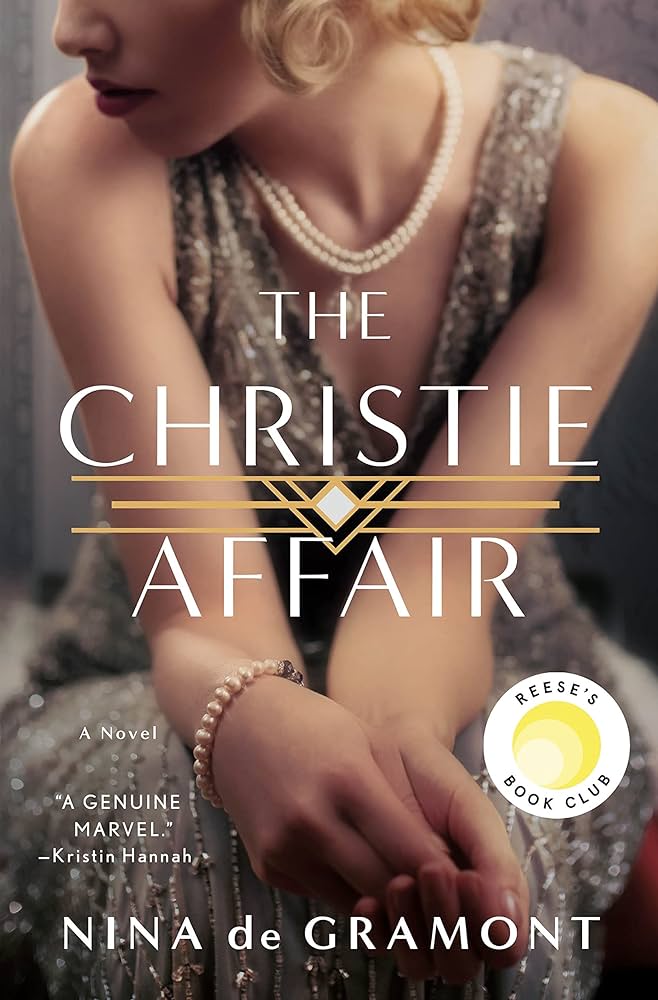
Book Review: The Christie Affair by Nina de Gramont

A flapper-esque woman in pearls on the cover. A 1920s disappearance. A work of historical fiction based on the life of mystery icon, Agatha Christie. I’ll be honest: the cover, and the jacket-flap summary, won me over. However, ‘The Christie Affair’ by Nina de Gramont turned out to be something different than I initially expected.

This novel is a character-driven, slow-burning tale. While the story’s hook is to explore the whereabouts of Christie during her famous two-week disappearance with no explanation, the bulk of the story revolves around a supposed reason for her disappearance: her husband’s mistress, Nan.

As the story unfolds, it sets a stage with distinctive characters clearly in the spotlight. The two primary women, Nan and Agatha, seem to have few things in common on the surface, but they are connected in surprising ways. Agatha’s husband, Archie, is a truly love-to-hate-him character, reminiscent of Tom Buchanan from ‘The Great Gatsby’. The inspector on the case of Agatha’s disappearance, Chiltern, gives strong nods to Christie’s famous detective, Hercule Poirot. Lastly, Finbarr, a tragic, war-torn, childhood love of Nan’s, adds complexity and uncertainty to the whole.

The setting and style of the story are very believably 1920s, reminiscent of works written during that time. Even more impressive is how the style of ‘The Christie Affair’ mimics the work of Agatha Christie herself. This lineup of memorable characters, while initially only mildly interconnected, becomes closely tangled as one mystery unfolds into many more—ultimately leading to the revelation of unexpected connections, motives, crimes, and resolutions. Interestingly, and perhaps appropriately, Christie’s character is more background to the main actions of the story. Her disappearance focuses more on internal resolutions, showcased by her furious writing throughout. The reader will be much more caught up in the mysteries surrounding the true main character, Nan.

Ultimately, this book is more than it seems; it’s not just a cozy mystery, or a fabulous homage to Agatha Christie, but also a portrait of how we all, to some degree, write the mysteries we present to, or hide from, the world.

I give The Christie Affair 4/5 quills!

Have you read The Christie Affair? What did you think? (Personally, it made me want to add some Agatha Christie books to my Good Reads list!)

P.S. Yes, it’s me! I’m still here! I’ve been freelancing blogging so much for other people over the past couple of years, but I’m back to my personal blog to keep in touch with writing (and reading) that I do for my own self. I am not calling it a “2024 resolution”…despite the fact that this review comes on 1/1/2024 along with the desire to read and review one book a week this year. I’m not calling it that. Regardless, I hope it will turn out that way. Anyway, I anticipate this blog being more book-centric this year. Thanks for being here!

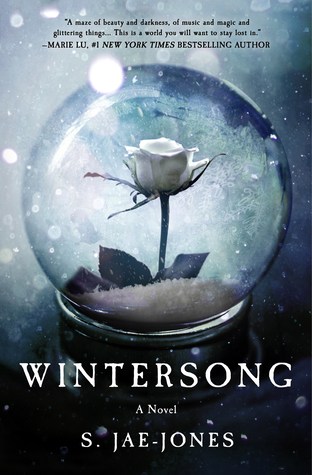
AMWAP Book Review: Wintersong by S. Jae-Jones

Note: AMWAP Reviews are a thing I made up. Each book review is exactly the same amount of words as number of pages in the novel being reviewed. I like to challenge myself to read a few books a month, but don’t always write a review. If there’s a book you would like to see reviewed, leave it in the comments! -Katie


Length: 406 Pages, The following review: 406 words

Jae-Jones’ debut novel is a dark, romantic fairy-tale for young adults that combines traditional folklore with modern themes of self-discovery. Nineteen-year-old Liesel seems plain and responsible, but she has a wild streak, and a fierce talent, buried beneath her familial duties.  As a child, she danced to the music in her head and played games with a mysterious boy whom she pretended was the Goblin King. As years pass, she grows into a stifled composer living under the shadow of her beautiful sister and gifted brother.  When her sister is taken to the Underworld by the (very real) Goblin king, Liesel must accept the reality of her childhood imaginings. Armed with tenacity, Liesel travels to the Underground, where she discovers that the Goblin King and his domain are more complicated, and more connected to her own passion, than she ever would have guessed.

It’s a tale as old as Hades and Persephone. And it’s undeniable that S. Jae-Jones took blatant inspiration from Phantom of the Opera and Labyrinth, too.  Honestly, there are a few times when it’s a little too much. For instance, Wintersong’s Goblin King bears an uncanny resemblance Bowie’s Goblin King (down to the two differently-colored eyes). Still, Jae-Jones expands this character in ways that makes him angsty and interesting in his own right. In fact, character development is something that this author does really well.  The main character, Liesel, toes the line between complacent young woman and fiercely-passionate feminist in a way that will resonate with almost any female reader.  Her relationship with music, too, is evocative and unique. Ultimately, this protagonist’s complexities, and her unexpected decisions throughout the book, give this story a fresh spin.  The author’s writing is lyrical and descriptive with some unnecessary repetitions. I enjoyed her style, though it is not for readers who prefer more action-driven writing. My main criticism of this novel is that the pacing seemed slightly off.  With minor tweaking and editing, this book had enough plot to be two separate novels. As it is, the story comes across as a little unbalanced.

This novel is labeled as YA, but I actually think there is more there for the emerging New Adult audience (twenty-thirty somethings).  Adult lovers of music, fairy-tales and dark romances will gobble up this escapist novel with hidden depth. Wintersong renewed my inner-teenager’s passion for Labyrinth and Phantom of the Opera, while giving me some brand new characters to love.